
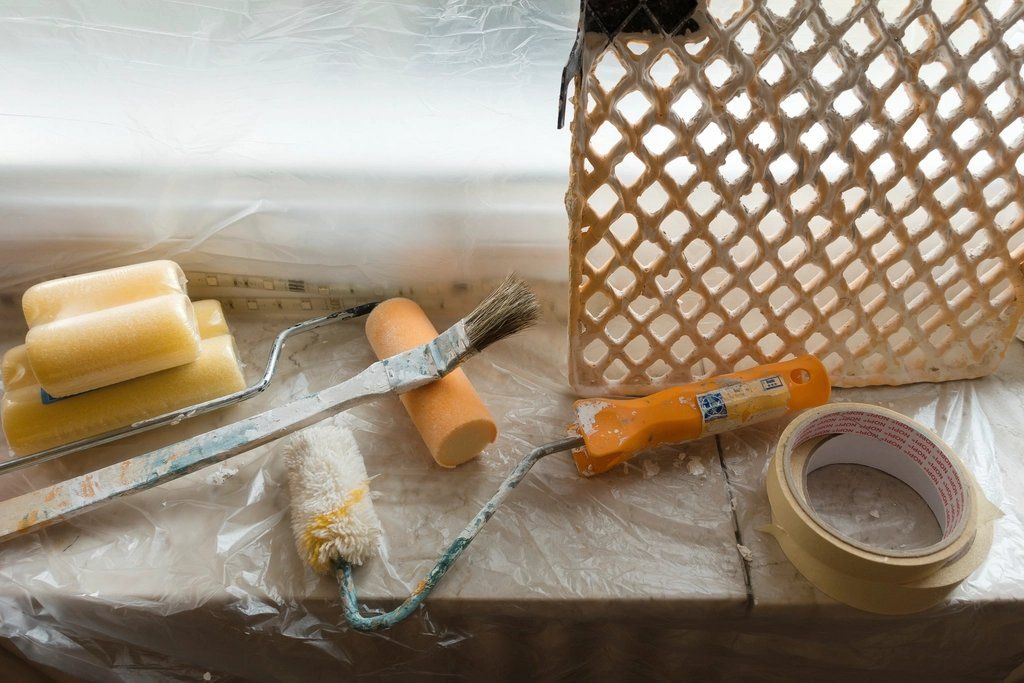
A good drywall repair is one you can’t find afterwards. That takes more than a dab of filler: it means cutting back to solid material, taping properly, feathering the compound wide, and priming before paint. We do the same careful work whether it’s one doorknob hole or a whole ceiling.
Repairs that disappear
- Small holes and dents get filled, sanded and primed.
- Larger holes get cut square, backed, patched with new drywall and taped.
- Cracks at corners and over doors are usually from movement. We tape them so they don’t come straight back.
- Nail pops get reset with screws and refinished.
Then we paint the whole wall, corner to corner, so there’s no shiny patch where the repair was.
Water damage
A stained or sagging ceiling means water got in somewhere. Once the leak is fixed, we cut out the damaged drywall, check the space above for moisture, and replace it. If insulation got wet, that comes out too. Painting over a water stain without fixing the cause just brings it back.
Stipple ceilings
Stipple, or popcorn, ceilings were common in GTA homes for decades. Older ones can contain asbestos, so a sample gets tested before anything is disturbed. If it’s clear, unpainted stipple can usually be wetted and scraped. Painted stipple doesn’t scrape well, so we skim-coat it smooth or cover it with new drywall. Either way, you end up with a flat, modern ceiling.
Painting
Good paint jobs are mostly preparation: filling, sanding, caulking trim, and priming patches. We protect floors and furniture, cut clean lines, and use the right sheen for each surface: flat for ceilings, eggshell or matte for walls, semi-gloss for trim and doors.
New walls and bulkheads
Closing in a storage area, building a closet, or boxing in a pipe? We frame, board and finish new walls and bulkheads to match the rest of the room.
Preparing the room
Clear what you can before we arrive. Small items, wall art and anything breakable should go to another room. We move the larger furniture to the middle of the room and cover it. Floors get drop sheets, and we tape off trim, windows and outlets before sanding or painting.
Sanding drywall makes fine dust. We use sanders connected to a vacuum where we can, and we close off doorways to keep dust in the work area. It still helps to cover vents and close the door to rooms we aren’t working in.
Choosing paint colours
Colour looks different on a wall than on a chip. Test two or three samples on the wall and look at them in the morning, in the afternoon and under lamps at night. North-facing rooms tend to look cooler, and south-facing rooms look warmer. If you can’t decide, a soft neutral on the walls and a clean white on the ceiling and trim is a safe place to start.
Ask us about low-odour paints if anyone in the house is sensitive to smells. Open the windows while the paint dries, and keep the room well ventilated for a few days.
What affects the price
- Size and number of repairs, or square footage for full rooms
- Ceiling height and stairwells
- Stipple removal method and testing
- How many colours, and whether trim and doors are included
Get a quote
Send us photos of the damage or the rooms you want painted, with a rough size. Small repairs can often be priced from photos alone.