
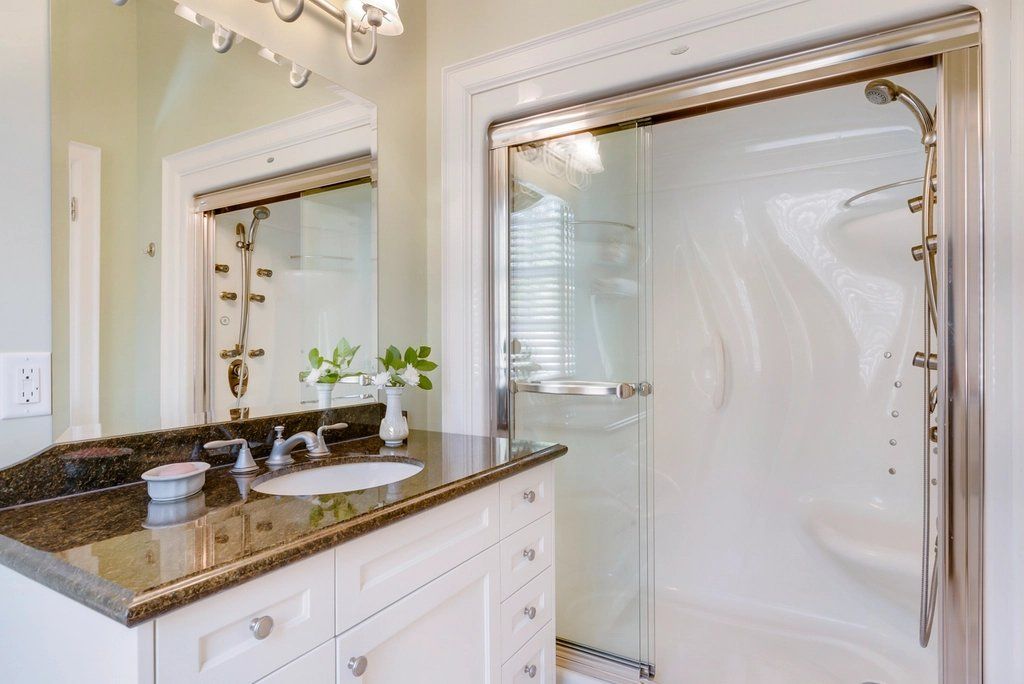
Bathrooms get used hard, and they show their age fast: cracked grout, a vanity swelling at the base, a fan that just makes noise. Whether you want a quick update or a full renovation down to the studs, the goal is the same: a room that looks good and stays dry for years.
Small update or full renovation
A bathroom update keeps the layout and the tub or shower, and replaces what you see: vanity, toilet, faucets, mirror, lighting and paint, sometimes the floor. It’s quick and much less disruptive.
A full renovation takes the room back to the studs. That’s the time to fix old plumbing, add blocking for grab bars, improve ventilation, and change the layout if you want to.
We’ll look at what you have and tell you which one makes sense. Sometimes an update is all you need.
Waterproofing is the part you don’t see
Most bathroom failures come from water getting behind tile. In showers and tub surrounds we install a waterproof membrane behind the tile, sloped to the drain, with sealed corners and pipe penetrations. The exhaust fan should vent outside, not into the attic, and be sized for the room. None of this shows when the job is finished, which is exactly why it matters.
Tub to shower conversions
Swapping a tub for a walk-in shower is popular, especially for people planning to stay in their home as they get older. It usually means moving the drain, building a sloped floor and adding glass. If the floor is wood-framed, we check the joists before we cut. A low or no-threshold entry is often possible.
Choosing materials
Large porcelain tiles mean fewer grout lines and less cleaning. Wall-hung vanities make small rooms feel bigger. Some products, like custom glass and certain vanities, take a few weeks to arrive, so we order them early and schedule around the delivery.
What to expect during the work
Demolition is loud and dusty, so we seal the doorway and protect the floors on the way in and out. The first few days cover removal, plumbing rough-in and any repairs to the framing or subfloor. Waterproofing and tile come next, and most membranes need time to cure before tile goes on. Fixtures, glass and paint finish the job.
Tile setting and grouting both need drying time. Expect a day or two where the shower can’t be used even after the work looks finished. We’ll tell you the date it’s ready, and we’ll tell you if anything changes along the way.
Preparing your home
Clear the cabinets and the shelves in the bathroom before we start. Move towels, medicine and toiletries to another room. If the bathroom is upstairs, tell us which path we should protect from the front door. Decide on fixtures before the work begins, since a late change to a vanity or a faucet can hold up the schedule.
What affects the price
- Update versus full renovation
- Moving plumbing, or keeping fixtures where they are
- Tile size, pattern and how much of the wall is tiled
- Glass, vanity and fixture choices
- Repairs found once the old finishes come off
Get a quote
Send us photos of the bathroom from the doorway and of each fixture, and tell us what you’d like to change. We’ll get back to you with next steps or a time to come by.